

Jacopone lived from 1230, four years after the death of St. Francis, until 1306, when Dante Alighieri was writing the Divine Comedy. The poet and mystic of the Franciscan ideal, Jacopone da Todi was a major figure in European culture of the 13th Century, and his relevance for spiritual seekers continues today.
As a man who followed a spiritual compass without conforming to the dictates of the day, Jacopone aroused the ire of church leaders and suffered persecution. His record has endured distortions for centuries, limiting access to the inspiration of his life and work.
That is until now.
We are on a journey to strip away the distortions so that the light of this medieval mystic can finally shine through.
Spring Newsletter
April 2026
Volume 3 | Issue 1
After a long delay we are delighted to present the latest edition of our Newsletter. We continue with Part 2 of our series on 'The True Story of Jacopone da Todi', and we present a laude that is possibly the most misunderstood of all Jacopone's poems. Ken Gaylord also reflects on the connections between the recent restoration of the cathedral of Notre Dame de Paris and the wonderful built environment of Todi. We hope you enjoy reading!
To read our previous newsletters visit our archive here.
Stories from Todi
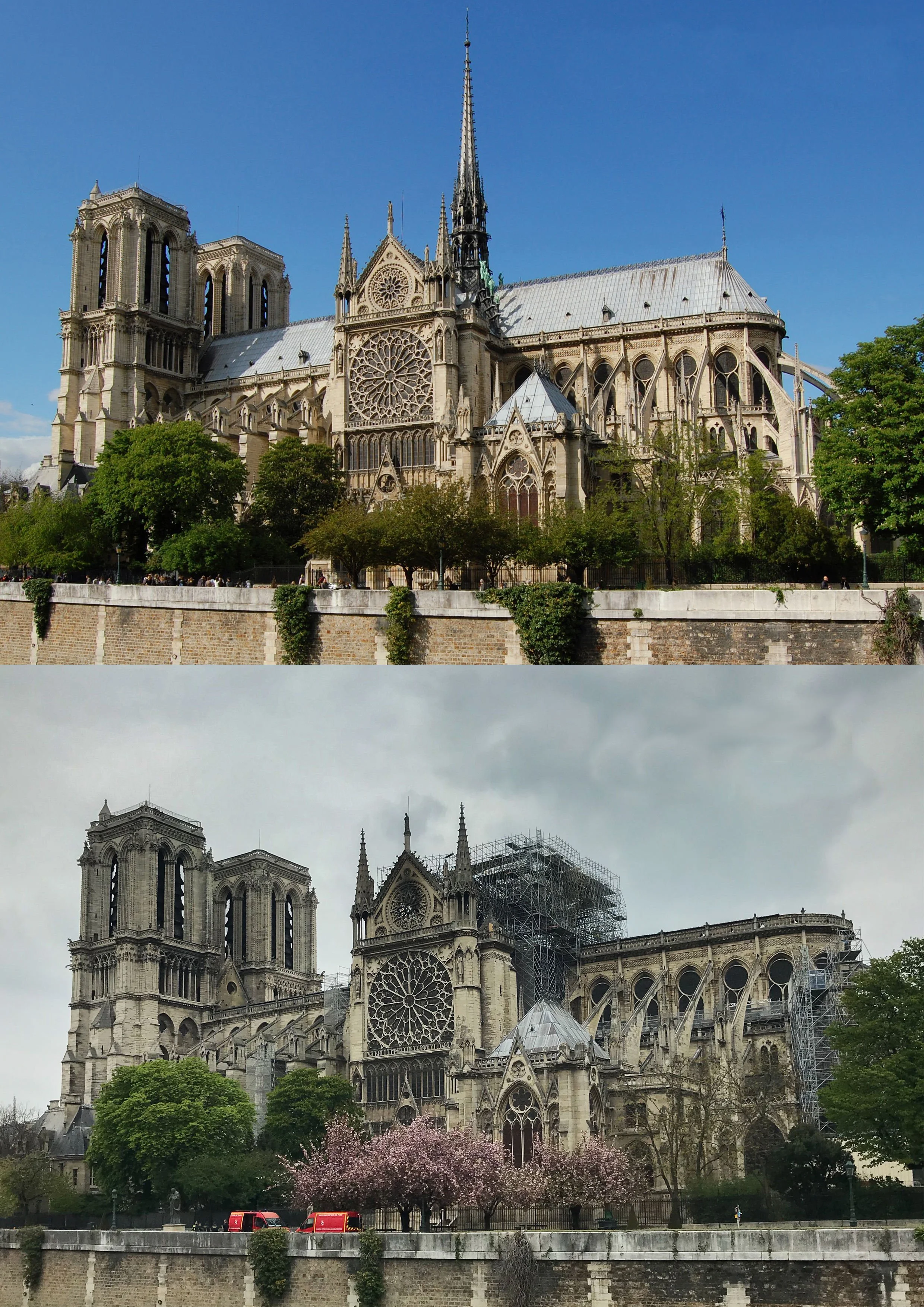
Notre Dame and Todi
Notre Dame is rebuilt!
I remember the dreadful images of the roof and spire on fire. I felt sorrow, having visited and admired the cathedral in decades past. It surely is one of the greatest artistic and architectural accomplishments of man. Would it be rebuilt? Could it be rebuilt?
Six weeks after that April 2019 conflagration I boarded a one-way flight from New York to Rome. I needed to rebuild after a type of conflagration in my own life. I found my way to Todi.
The Real Jacopone
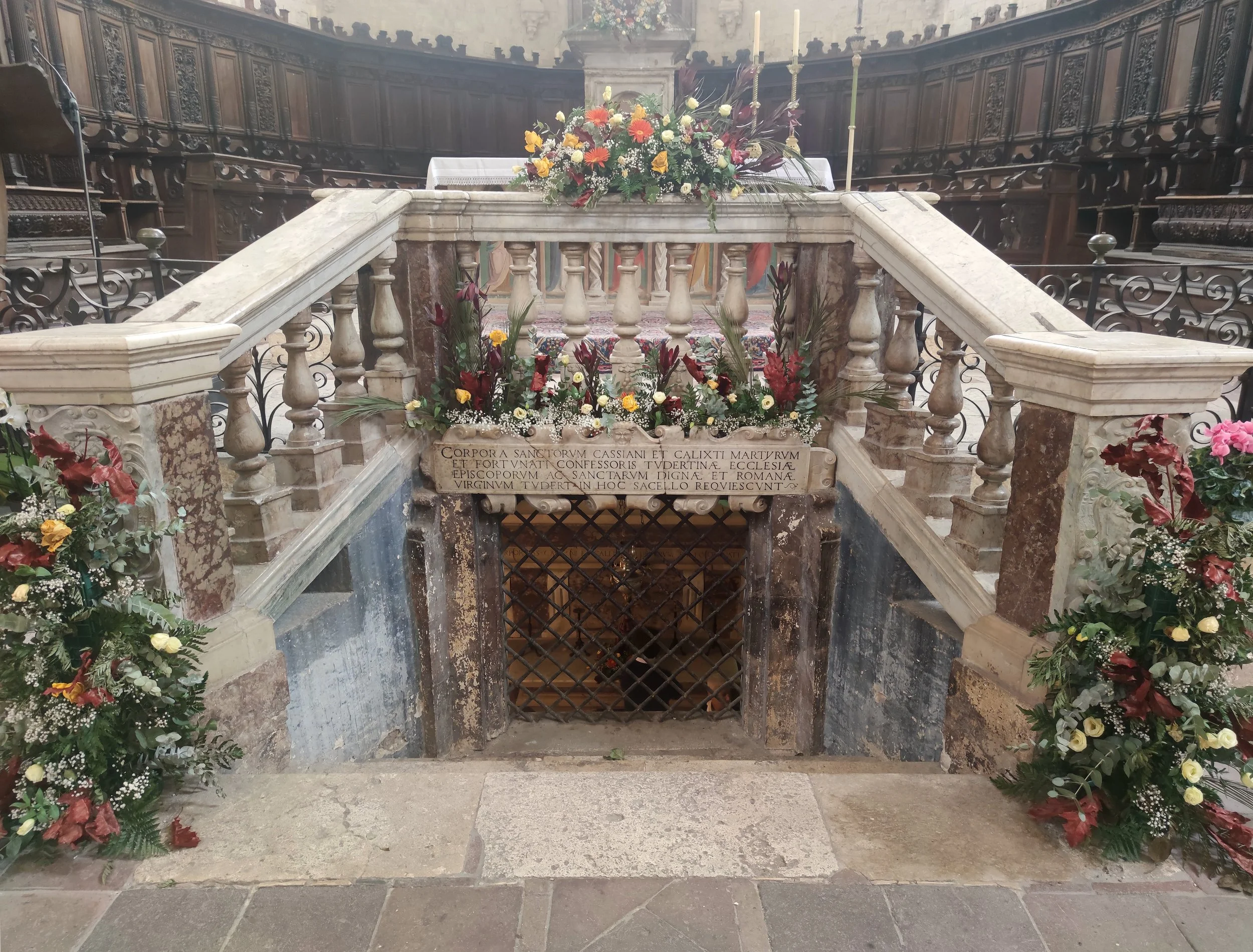
Admired, Cancelled, Rediscovered: The true story of Jacopone da Todi, c1270-2024. Part 2.
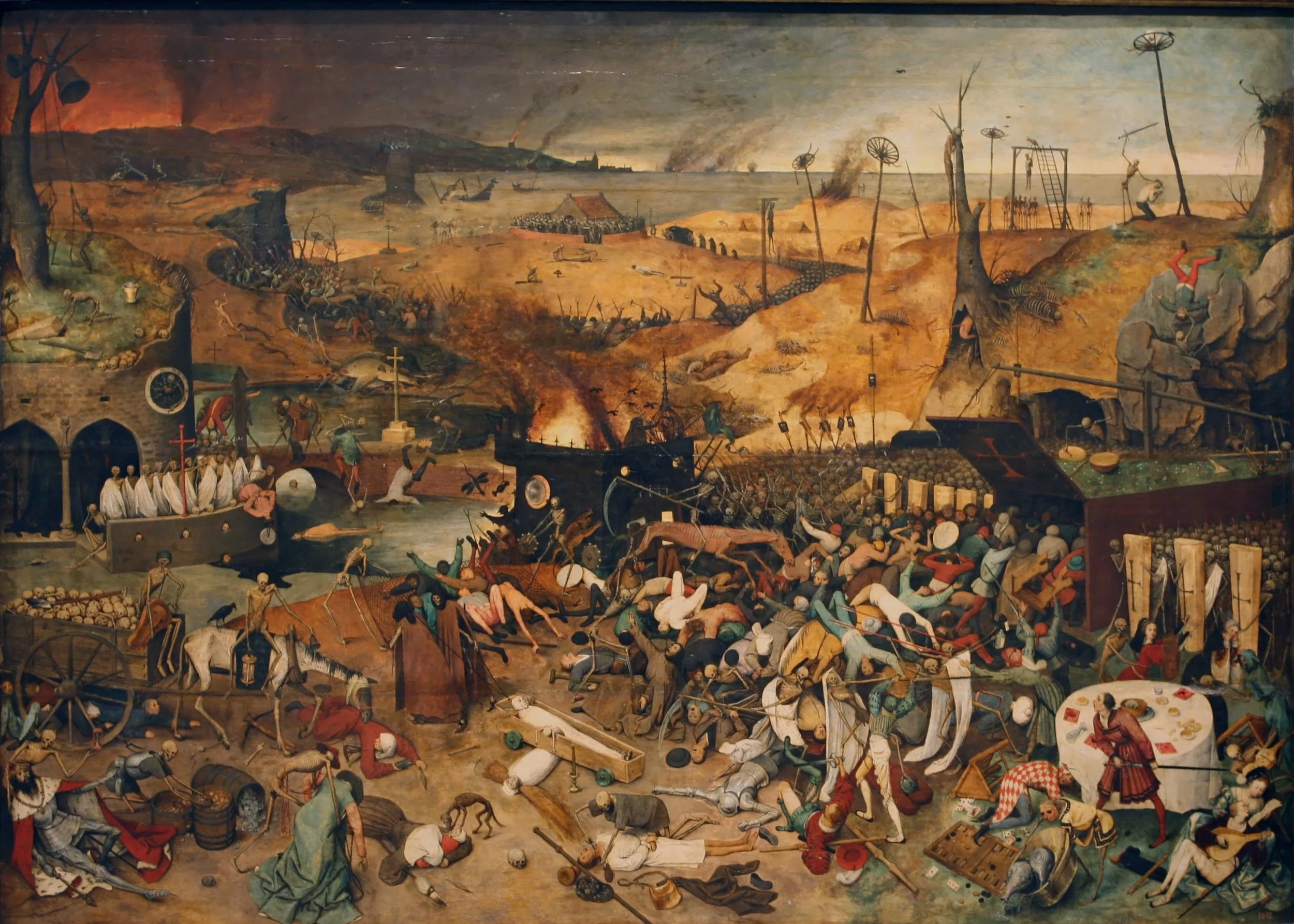
For over three centuries after his death, Jacopone was widely admired and his laudi were highly regarded, both as religious poetry/songs and as texts for spiritual formation. This situation changed dramatically during the tumultuous 1500s, the period of the Protestant Reformation and the subsequent Catholic Counter-Reformation. This was followed by the darkest hour in the story of Jacopone: another period of over three centuries, from the end of the 1500s to the beginning of the 1900s, when the axe of the Counter-Reformation fell on Jacopone’s writing and the Curias of Rome and Todi sought to obliterate his memory. In modern terms, he was ‘cancelled’.
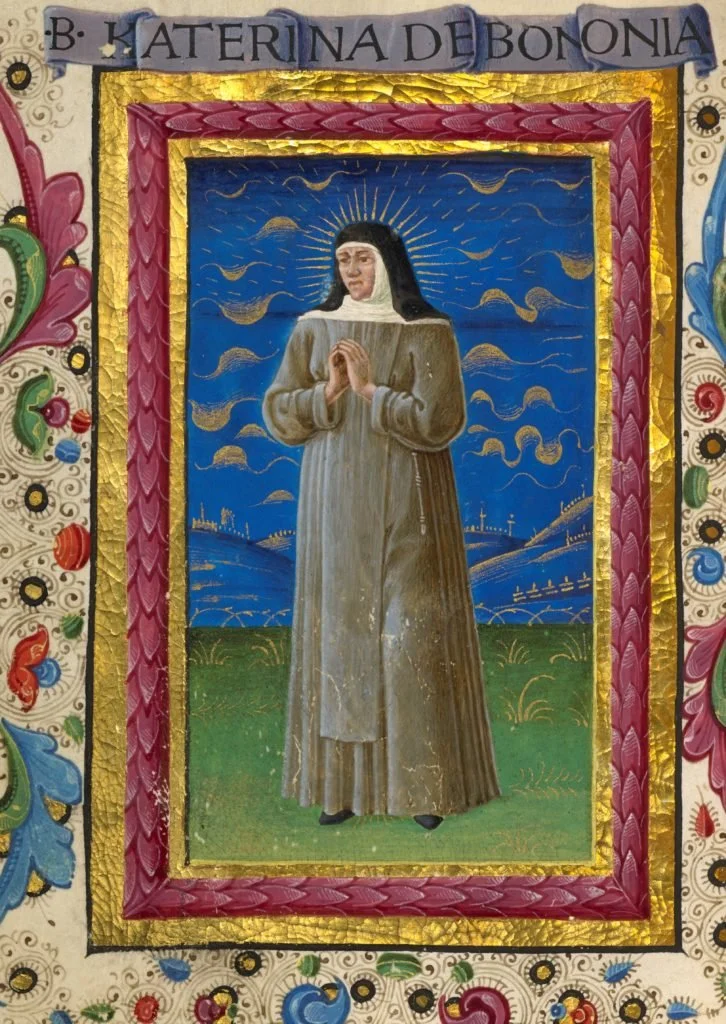
Saint Catherine of Bologna
In our last Newsletter we highlighted the many major figures in the Late Middle Ages who admired Jacopone and used his poetry for spiritual instruction. Since the Newsletter was published we have been able to add another figure to this list: Saint Catherine of Bologna (1413–1463).
Laudi
Laude XLVIII: O Signor, per cortesia, manneme la malsania / ‘O Lord, please send me disease’
This is perhaps the most intriguing, most provocative and most misunderstood of all Jacopone's laudi. At first glance, it seems to be the prayer of someone who asks God to punish him with all kinds of painful and disgusting diseases, because he is conscious of his great sinfulness. And most people, including most scholars, have seen it this way, even interpreting it as evidence of Jacopone’s hatred for his own body. But when you really think about it, this view doesn’t stand up.
Other News
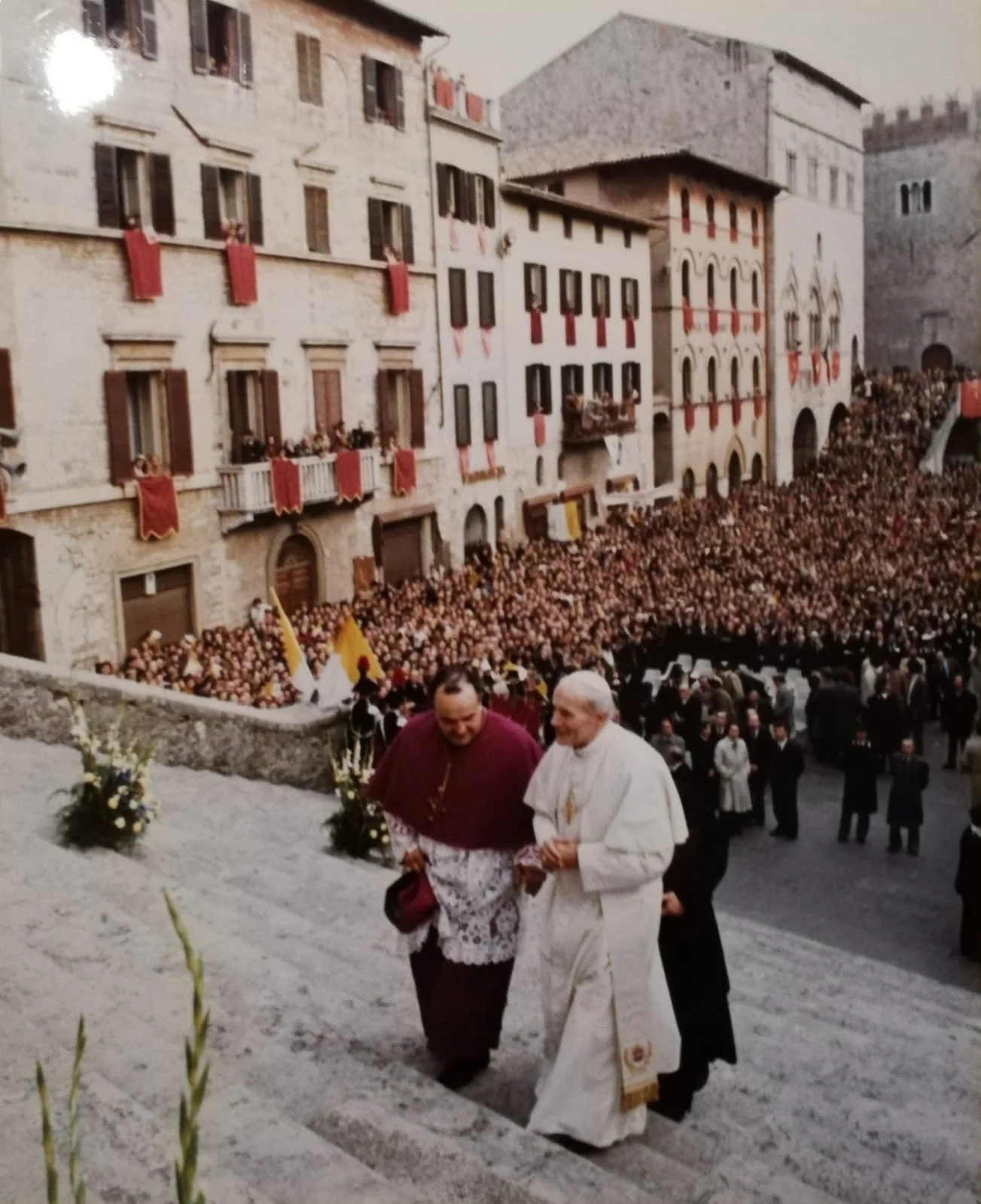
Pope John Paul II's visit to Todi in 1981
Pope John Paul II’s visit to Todi in November 1981 is well known but it is often forgotten that one reason for his visit was the desire to honour Jacopone. On that occasion, John Paul II said:
I cannot forget your fellow citizen, friar Jacopone da Todi...
Podcast
Claudio Peri has produced a podcast series reviewing various aspects of the life, work and mysticism of Jacopone da Todi. In each issue of this newsletter, we will present two episodes of this podcast, recorded both in Italian and in English.
No.10. The manipulation of the truth.
In this podcast we will discuss the attempted manipulation of Jacopone’s memory. The 16th century was the most dramatic period in this story, when we risked losing our poet forever.
No.11. The obscuring of memory
In this podcast we are discussing the concrete effects of Angelo Cesi’s initiative on Jacopone’s memory. It seems that, having agreed to excide from history the last ten years of jacopone’s life, Angelo Cesi has to ensure that every trace of Jacopone after 1296 was removed from the episcopal archives.
St. Patrick and Jacopone
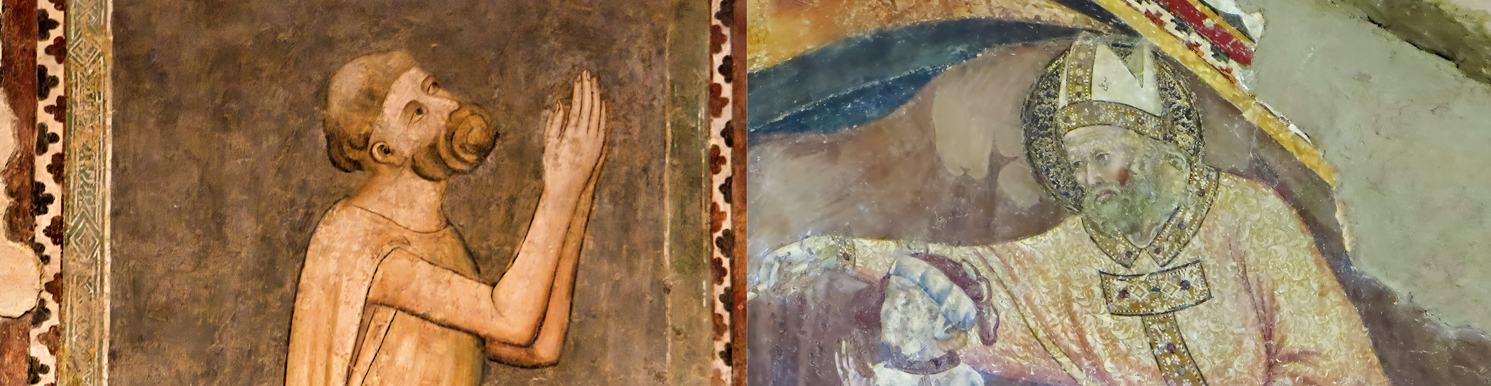
At this time of year the figure of St Patrick features very largely in Ireland. St Patrick’s Day (17 March) is not just the religious feast of a saint – it’s also Ireland’s national holiday, the focus of a major festival and a worldwide celebration of Irishness. But this year I have found myself thinking about the comparison between Patrick and Jacopone da Todi.
What have they in common? Both are real people who became legends. Patrick was transformed into a heroic wonder-worker, battling kings, demons and pagan deities. And, of course, banishing the snakes out of Ireland! Jacopone was not so lucky – he became a dour, angry extremist, a half-mad fanatic doing crazy things on the streets and piazzas of Todi. But what they really have in common is this: in both cases the real person, the true story, is far more interesting than the legend!